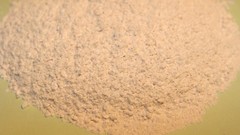
25g Luminol ultrapure 99,9% ( Blood trace detection, luminescence dye)
Specifications
| Return Shipping Will Be Paid By | Buyer |
| All Returns Accepted | Returns Accepted |
| Item Must Be Returned Within | 30 Days |
| MPN | Does Not Apply |
| Brand | Unbranded/Generic |
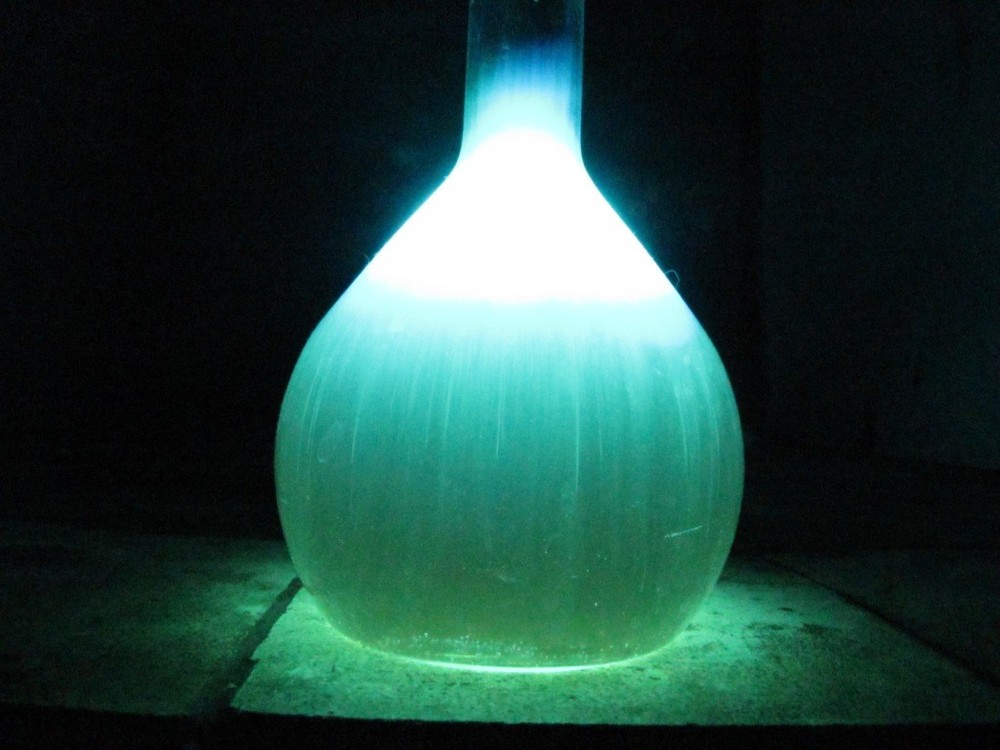
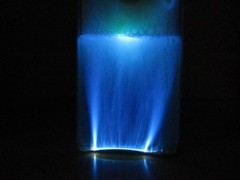
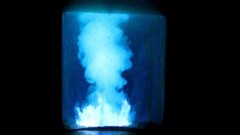
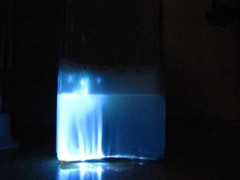
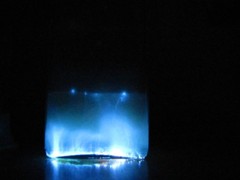
Luminol 25gultrapure, >99,9% Luminol is used by forensic investigators to detect trace amounts of blood left at crime scenes , as it reacts with iron found in hemoglobin. It is used by biologists in cellular assays for the detection of copper , iron , and cyanides , as well as of specific proteins by western blot .To exhibit its luminescence, the luminol must be activated with an oxidant. Usually, a solution containing hydrogen peroxide (H2O2) and hydroxide ions in water is used as the activator. In a laboratory setting, the catalyst used is often potassium ferricyanide: In a transparent container with 200-500 mL of water was added 1-3 g of luminol and 1-2 g of sodium hydroxide (or potassium hydroxide), the contents are mixed well. Thereafter, in the dark was added 100-150 ml of 5% hydrogen peroxide. Begins a faint glow. Next added a pinch of crystal potassium ferricyanide. Starts strong luminescence.It is possible to create a glow during the oxidation of luminol with oxygen from the air. In a transparent container mix 25 g of crushed potassium hydroxide 0.1 g luminol and 100ml of dimethyl sulfoxide (DMSO). Blue luminescence appears with stirring. Synonym: 3-Aminophthalhydrazide, 5-Amino-2,3-dihydro-1,4-phthalazinedioneCAS Number 521-31-3 Molecular Weight 177.16 EC Number 208-309-4
Related Items